Business Strategy
Why 75% of Your Wealth Platform is a Waste of Money
We hosted a Wealth Dinner with Quantum Metric to talk digital transformation in wealth management. Here's what came out of it.
AI provides an opportunity to rethink processes and develop bespoke opportunities in the public sector
Public sector bodies became available 24 hours a day, seven days a week when the Internet changed how society communicates, creates and transacts. Artificial intelligence (AI) has the potential to be a similar significant change to public sector organisations, creating another new dynamic between the citizen and the public sector.
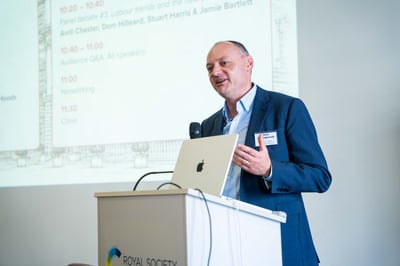
Digital leaders will be the vanguard of this change, initially. AI is, therefore, a new playbook for the public sector. In this Red Badger Whitepaper digital leaders from the public sector and adjacent areas describe the opportunity AI offers, how it challenges society, and therefore the role of the public sector.
Societal Impact
The role of the public sector is to uphold society and deliver the essential services required, whether they be defence, health, education or planning. AI has already had a major impact on society, some negative, such as deepfakes, others highly positive. The public sector, therefore, has to be aware of the impact AI has on society. Author of How to talk to AI, Jamie Bartlett says: “There has not been a consumer app that has been picked up quicker than ChatGPT; there are 2.5 billion prompts a day.”
This mass adoption has, Bartlett says, completely disrupted one of the tenets of society, and one certain parts of the public sector have always stood for - knowledgeable authority. “The relationship between effort, knowledge and output is completely broken. It is impossible for any of us to determine from a piece of work whether somebody understands what they have given us, whether it is accurate, and is it testimony to the effort they have put into it,” Bartlett says.
With that level of uncertainty in the minds of everyone, no matter their relationship with AI, it means the way authority and knowledge are judged is completely changing.
Process Change
Operating models cannot remain the same. AI is an opportunity for the public sector to rethink its processes and it is highly likely that citizens will demand that rethink. Karl Hoods, Group CDIO at the Department for Energy Security and Net Zero says: “We have to start re-imagining how we do things. There is a risk of layering on top.” This was a criticism placed on the public sector in the early days of the Internet, where existing paper-based methods were just turned into web forms. Citizens were left frustrated with services that were as clunky as before, and in some cases made worse, by being online. This faster route to frustration is something that concerns Hoods. Author Bartlett says many private sector organisations are already struggling with no useful utilisation coming from the time gains AI provides employees.
Across all sectors, AI has the opportunity to reduce costs, increase outcomes and cut bureaucracy. Digital leader Avril Chester, who has led technology in the public sector, financial services and membership organisations says this is an opportunity to ask: “Why are we doing things? And what are we doing them for? Be brave in asking that to the stakeholders and peers, and ask how do we drive the best results for the citizens?”
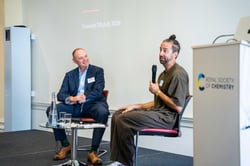
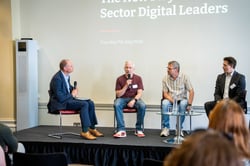
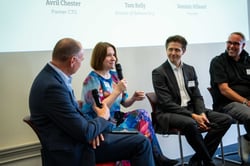
Bartlett adds that the proportion of administration roles in organisations, ranging from strategists to analysts has grown, this during a period of technological advancement. AI could lead to a drastic slimming of administration roles. That may not be negative; the public sector continues to face budget pressures and demand for services is on the increase; therefore more of the budget needs to go on frontline services and not on administration. AI could enable this.
The budget constraints and rising demand are resulting in rising frustration with the public sector. This paper was written as the UK once again changed Prime Minister, the sixth in 10 years, and citizens witness or perceive the services they receive are declining in quality. “I don’t think we have grasped how frustrated people are, and that means we have to use AI to change that,” Bartlett says.
AI empowers citizens, providing increased access to information, a powerful tool for curating complaints or Freedom of Information (FoI) requests and even legal advice; as a result, volumes will increase, and the public sector has no choice, many believe, than to use AI to manage, respond and analyse this material. Bartlett warns that the public sector must not use AI as just another communications channel: “Technology changes the sort of message people expect and how they want to receive it. Populist movements have understood that it is the style of communication that has changed with social media and that it is not just a delivery platform”.
Responding to the needs of citizens will therefore require the public sector to use AI as a way of rethinking all of their processes, so that they can improve outcomes for citizens, communicate in the right way and reduce costs. As Hoods says: “We have been taking a lot of our people through system thinking and product mindset. This gets people to focus on the outcome they want to achieve and work backward from a technology standpoint.” This has resulted in the Department for Energy Security and Net Zero developing blended teams working on citizen outcomes and AI working as an assistant.
When is the right time to use AI?
Digital leaders in the public sector, as with all sectors, will need to help their organisations decide when to use AI and when not to. In this, the public sector will reflect the challenge society faces too. When a large language model (LLM) can instantly create a summary of a subject, there is a risk that employees fail to learn. Engaging with difficult subjects is how learning takes place. Using AI leads to what is called cognitive offloading; the need for thinking is outsourced to the machine.
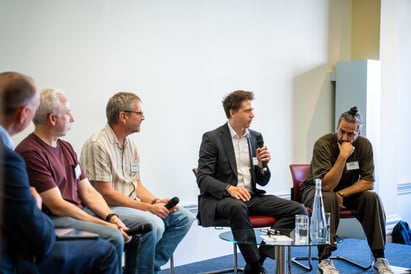
That means individuals and organisations will need to understand when it is good to take time to think through issues and when a machine is a better use of public funds. Author Bartlett believes most work will become a hybrid of machine and human outcomes, but the human has the final sign-off.
Tom Kelly, Director of Software Engineering at UK Parliament, says AI or not, one thing doesn’t change: “The core mission doesn’t change, and we are there to enable people to do their best job. Trust is very important to the public sector, and AI outputs that hallucinate means that is something we have to be on top of.”
How to govern AI use?
Organisations in a variety of sectors are already discovering that the costs of AI usage can outweigh the benefits. Funded by the tax payer, the public sector has to be sure its use of AI is cost-effective. CIO Karl Hoods believes innovation must be delivered in tandem with good governance. “It is too early to know if something like Cloud FinOp will work, but we cannot forget about it. There is a tension between getting on and doing things and assessing whether other models or hosted models could work; all of that has to be thought through.”
Hoods goes on to add that as organisations move AI from Proof of Concept (PoC) to part of the operations of the department, then measurement needs to move to being about the value generated. All of this, he says, means governance needs to become more agile so that it can keep pace with the new ways of working.
Building AI
AI has the potential to provide the public sector with a way of developing technologies for new processes and services in a cost-effective way.
For digital leaders, this is a major change; in recent years the mantra has been to buy not build and to seek economies of scale from vanilla technology, typically software-as-a-service (SaaS), “It used to be more expensive to build and engineers were famously late in delivery,” says Stuart Harris, Founder and Chief Scientist at Red Badger. Harris says building applications has typically taken a lot of time, effort and therefore cost, but with AI agents, processes that once required their own application can be collapsed into an agent, saving time, increasing access and efficiency.
Kelly at the Parliament Digital Services sees the benefit: “This is an opportunity to build really interesting things with people that really know Parliament, and they really want to solve problems.”
He adds that digital leaders will need to understand the cost profile of building or buying: “There are some systems that are so big and complex, like finance, that there is a case for buying, as the risk profile of getting it wrong is horrendous.There is a cost to building, but there is also a cost of ownership and we have already seen the benefits of AI in helping with the maintenance of systems.”
Harris agrees and adds that AI-written code is better quality, so maintenance costs decrease. “The quality bar can increase significantly. It has become good enough for production code; in fact, the agents are better at writing code, and we talk about human slop,” Harris says. “But to do that you have to use the right tools. Rust is a language that pushes high quality as it constrains the space that you operate in, so you get a better quality outcome,” he adds.
For the team members of digital leaders, Harris says their role is still vital. “We still need to supervise and make sure that we are guiding the AI in the right direction and to make sure it reaches our goal.” Kelly adds that the public sector should, where possible, utilise open source and open weight models to ensure software engineering is “not locked behind a subscription”.
Skills and ways of working
AI has created a great deal of concern. The government itself recently stated: “AI systems with capabilities that are improving rapidly and that could, if current trends continue, match or exceed human-level performance across an increasing range of tasks.” Like many other sectors, the public sector and its people will need to reskill. Karl Hoods reminds peers that often the building blocks, no matter the technology type, are similar. Therefore, he says it is important to foster a culture that is curious and where people feel secure to ask questions, something Kelly agrees with, adding: “AI is not a capability that stands by itself; it stands on the previous investments, capabilities and technical estate you have established.”
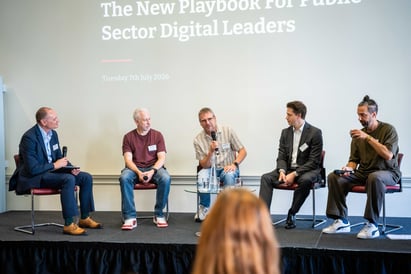
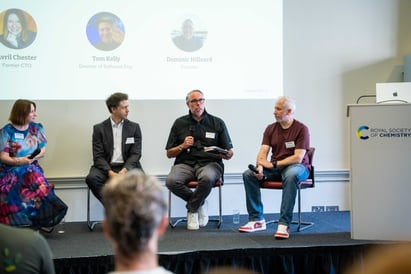
Harris of Red Badger and recruiter Dominic Hilleard believe organisations that use the adoption of AI to make significant cuts to their workforce are “short-sighted”. “This journey we are going on is a partnership between humans and AI agents, and we are greater than the sum of our parts. Jobs will reshape and shift to a system level thinking, rather than being stuck in the weeds,” Harris says.
Bartlett says that as roles move to a system level, employees will be compared to AI and that will be a challenge to individuals and organisations. Earlier in the report we discussed cognitive offloading, and this does worry Harris at Red Badger; he says engineers will need to make sure they understand the detail and don’t delegate learning experiences to the machine. CIO Chester adds: “Society and the organisation doesn’t owe it to you to remain relevant; that is on you.” She talks of how through schooling students are told what to do and learn from being told, but at university you have to think for yourself. In the past, work was like going back to school; you were told what to do. She believes that work will now continue to be like university and candidates will need to continually think for themselves.
| Key Takeaways: 1. Rethink processes: don't just add AI 2. Use agile governance 3. Prefer hybrid human+AI workflows 4. Assess build vs buy with cost of ownership |
Conclusion
The public sector, like all sectors, has a new playbook. A playbook that is not just for digital leaders and the technology function, but a playbook for the entire organisation to rethink its purpose, the way it delivers services to citizens, how and when it uses AI and other tools, and has to continually think for itself and reskill.
The insights in this whitepaper were gathered at a Red Badger event where digital leaders discussed openly with peers the opportunities and challenges AI provides to the public sector.

Add a Comment: